


By Phillip Greville, Business Development Manager
Recently, I attended the AusIMM NZ Branch Conference in Rotorua, New Zealand’s largest (and only?) mining conference. I have spent the past 10 years working across exploration and mining projects in New Zealand, Australia and the Philippines, but have had relatively little involvement in rehabilitation and mine closure, so when the conference opened with presentations on mine closure my initial thought was, “This isn’t a very positive way to start, talking about closing mines already!” After talking to others, I realised it was very intentional. It shows the importance of thinking about the entire project life cycle from exploration, extraction, processing, rehabilitation and future land use.
This complete life cycle needs to be addressed as there is a bit of apprehension in the industry with New Zealand’s upcoming election, particularly among those involved in projects awaiting decisions on whether they can go ahead. With a number of projects progressing through the current government’s Fast-track Approvals process, the election outcome may have a significant impact. Despite this uncertainty, there was still plenty of excitement about upcoming projects.
I presented work on one of these new projects, talking about how Oceana Gold is using the Datarock Core Platform to assist with geotechnical logging at its new Waihi North Underground development. Using existing core photography, we extracted RQD, fractures, and joint sets with machine learning. This presentation led to some interesting conversations as many people at the conference were seeing the platform and its capabilities for the first time. These conversations highlighted how many workflows still involve a lot of manual data collection, and I’m still yet to talk to a geo who enjoys logging RQD!
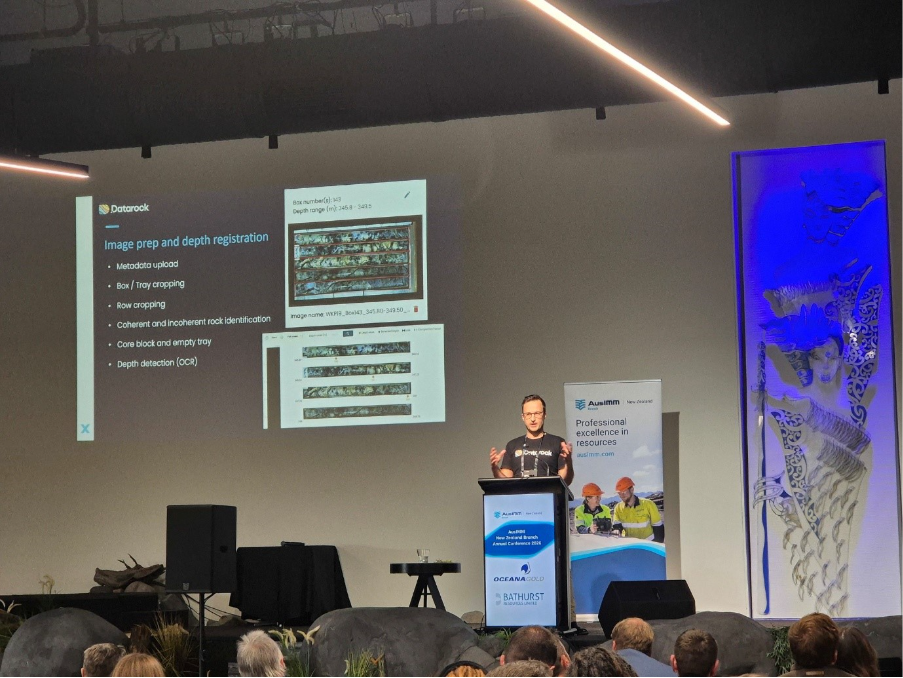
With Datarock now part of IMDEX, conversations also extended to other products from drilling muds and downhole survey tools through to ioGAS and, of course, the Datarock Core Platform. Where attendees were already using IMDEX products, we discussed how other tools could be added to their workflows and integrated with their existing systems.
These discussions about adopting and integrating new technologies reminded me of a previous Datarock blog post, “Reflections on Crossing the Chasm”. The post discussed the gap between early adopters of new technology and the wider group that will wait to see clear evidence of its value. The New Zealand minerals industry appears to be at a similar point, shown by JR Rowland from Auckland University presenting on the NZ Minerals Strategy, clearly identifying an opportunity to adopt advanced technology.
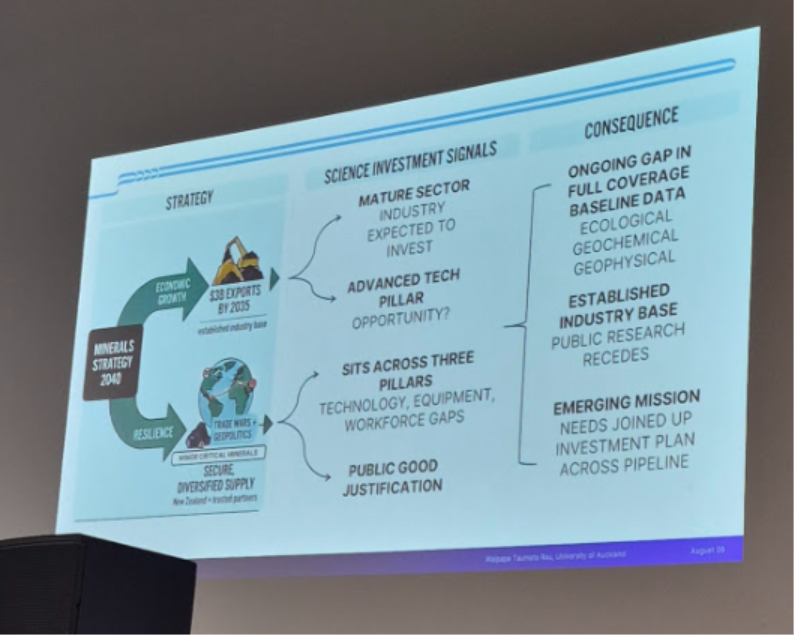
Some companies are actively testing new technologies and changing the way they work, while many others are interested but still need to see how these tools can be practically applied to their projects. There is a similar gap in public understanding of the industry, where awareness of the minerals needed for the energy transition has grown significantly (even my dad recently asked me about antimony!), but there is still a lot of push back against extracting these minerals.
That leaves us with a difficult question: we know we need these minerals, but at what cost? Not every project should go ahead simply because it contains a commodity we need. Each project has different economic benefits, environmental impact and long-term value, which needs to be properly understood before decisions are made.
Within New Zealand we have a range of these projects: from well-developed ones where the details have been closely examined and scrutinised by regulators, environmental groups and, in some cases, celebrities – to other companies who are promoting antimony resources in Queen Charlotte Sound based on records from the 1800s. (Maybe we leave that one alone, eh?)
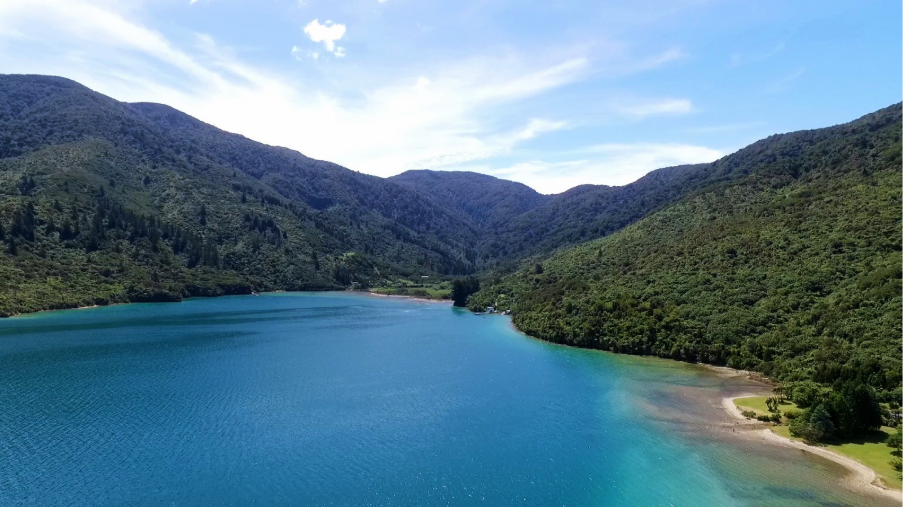
Figure 1 - Endeavour inlet hosting the Queen Charlotte Antimony Project
For some projects, it’s clear the environmental and social costs far outweigh the potential economic benefits. For others, better data, the right technology, and appropriate oversight can help us understand these trade-offs and make more informed decisions. Technology cannot determine whether a project should proceed, but it can provide the evidence needed to assess its value, risks and impacts. For New Zealand to develop more of its mineral resources, the challenge is not to extract more, but to carefully select projects and develop them responsibly.
If we get this right, New Zealand can maintain its ‘clean, green’ image while proving that successful resource development can be achieved across the entire life of a project. With better data and better technology supporting decisions from discovery and extraction through to closure, rehabilitation and future land use, we can create value that lasts well beyond the final tonne of ore.


