

Mineralogy
Modelling
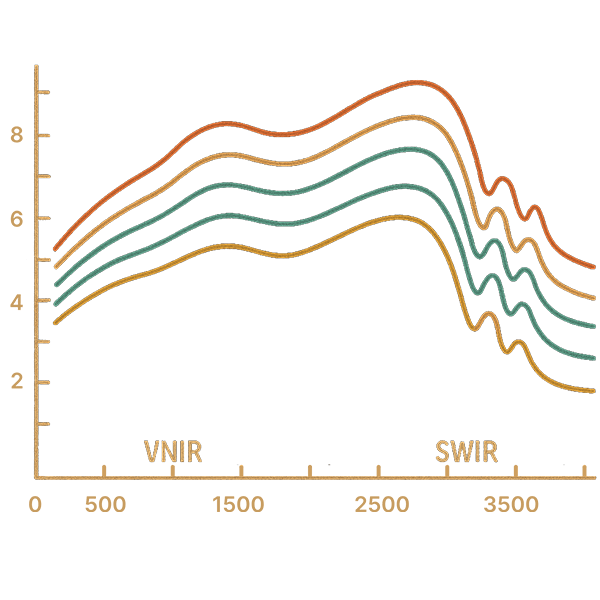
Mineralogy influences nearly every aspect of a mining operation. However, its application at scale is often limited by the high cost and restricted spatial coverage of quantitative datasets.
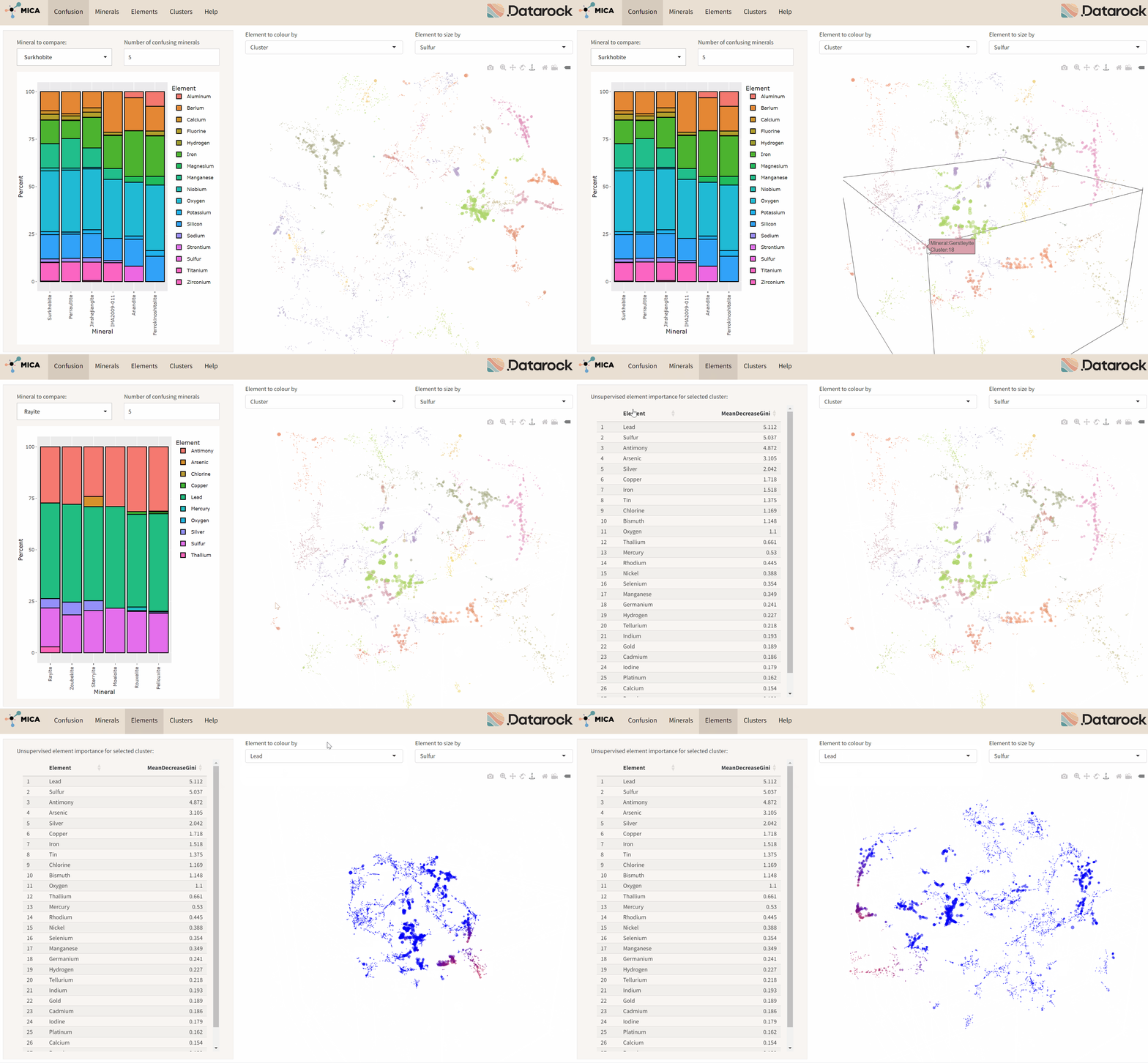
Datarock overcomes this challenge by using data analytics to build predictive models that connect high quality but sparse mineralogy data with broader, more accessible geoscience datasets—significantly extending their spatial reach and operational value.

Datasets
Datarock has developed mineralogical modelling capabilities that leverage the commonly collected quantitative and semi quantitative mineralogy datasets:
- FTIR
- VNIR/SWIR
- MLA
- SEM
- TIMA
- LIBS
- XRF
- Geochemistry

Value
- Cost reduction minimises the need for large-scale expensive test work by making better use of existing datasets
- Optimised sampling supports smarter sampling strategies that focus on high-value areas
- Improved data coverage fills spatial gaps in mineralogical understanding across the ore body
Use cases
FTIR modelling
Fourier Transform Infrared Spectroscopy (FTIR) is a rapid and cost-effective technique for material characterisation, offering valuable insights that enhance ore body knowledge.
When combined with data analytics, FTIR data can add value throughout the mining chain.
Applications
- Predict geometallurgical properties (e.g. hardness, recovery rates, and reagent interaction)
- Automate geological logging to enable consistent, high-volume classification of lithology and alteration types
- Quantify mineral compositions across broad spatial extents
- Expand test work coverage using FTIR to extend the value of limited mineralogical or metallurgical data
- Increase resource development efficiency and reduce dependence on slower, high-cost analytical methods while accelerating decision-making

Predicting mineralogy from assay data
Datarock has developed sophisticated analytics workflows that expand the utility of quantitative mineralogy datasets (e.g. MLA, TIMA, LIBS, and XRD) by integrating them with broader, routinely collected assay and geochemical data. These predictive models enable a substantial increase in the spatial resolution and coverage of mineralogical information across a deposit.
Applications
- Establish correlations between quantitative mineralogy (e.g. MLA, XRD) and assay datasets
- Optimise sampling strategies to improve mineralogical representation
- Generate deposit-scale mineralogy models that support and guide more detailed sampling, testwork and studies


