


By Gan Duan, Senior Geo‑Data Scientist
TL;DR: At PDAC 2026, Datarock showed how AI is a practical, essential tool in mineral exploration, using real‑world case studies to improve prospectivity modelling and ore‑body knowledge while highlighting the growing need for responsible data and AI governance.
The Prospectors and Developers Association of Canada (PDAC) Convention remains the world’s premier event for mineral exploration and mining. Held in Toronto from March 1–4, the convention welcomed more than 32,000 participants and over 1,300 exhibitors, bringing together governments, mining companies, investors, researchers, and technology providers from around the world.
The focus this year was how innovation, particularly artificial intelligence, is reshaping the future of the mineral sector.
Datarock attended PDAC 2026 as a presenter, exhibitor, and delegate. As part of the Mining Meets AI technical session, I presented how Datarock supports clients in improving prospectivity modelling and ore‑body knowledge through practical, real‑world applications of machine learning and artificial intelligence.
AI moves from theory to practice
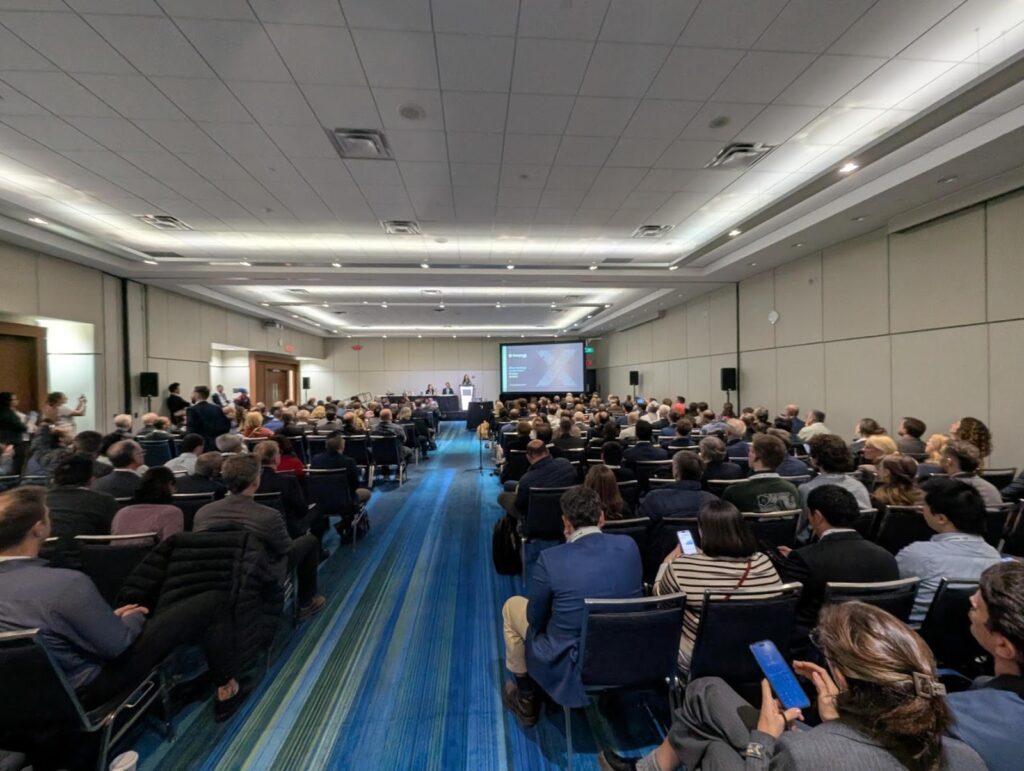
One of the key takeaways from PDAC 2026 was the pace at which AI is being adopted across mineral exploration. Compared to previous years, more exhibitors and startups showcased AI‑driven tools aimed at addressing long‑standing complex mining challenges. The Mining Meets AI session reflected this momentum, drawing a packed room of engaged attendees.
Discussions went beyond surface‑level enthusiasm, with graduate students and experienced geoscientists alike asking questions about detailed algorithms and applications of AI in geosciences.
This engagement signals a broader shift within the industry: AI is no longer viewed as experimental or optional. It is becoming part of standard geological workflows.
What Datarock showcased
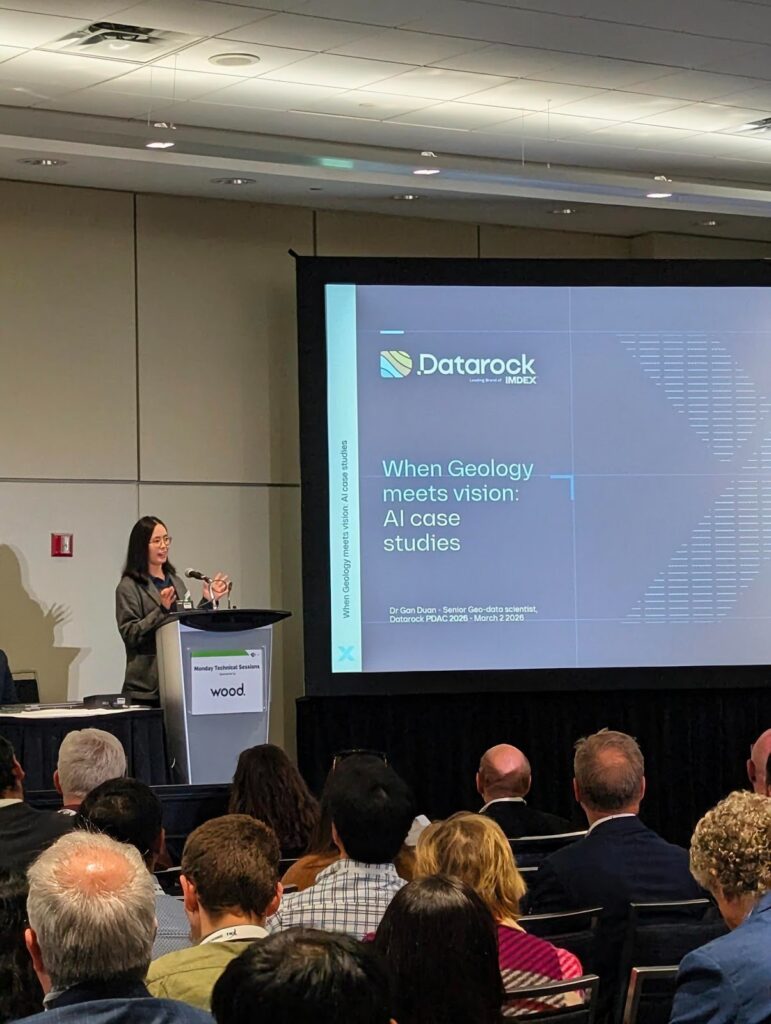
During the session, we demonstrated how AI can deliver tangible value when applied thoughtfully and responsibly. I presented two real‑world case studies that showed how advanced analytics can directly improve geological understanding and decision-making.
- We highlighted how computer vision techniques can extract meaningful textural information from regional geophysics data and how it can help characterise prospectivity modelling.
- We also showed how deep learning combined with data fusion can be used to improve lithology classification and provide clearer insights into ore body knowledge.
Together, these examples illustrated how Datarock helps clients move from data overload to clearer, more confident technical decisions grounded in consistent, reproducible analysis.
What’s next
My view is that AI and machine learning are becoming deeply embedded in geology, no longer optional but essential. AI agents are starting to support geo‑data scientists with routine analytical tasks, lowering barriers to building bespoke solutions. At the same time, growing reliance on digital data raises important questions about governance, data usage, storage, security, and responsible AI use. Addressing these challenges will be essential as the industry continues to adopt AI at scale and move from experimentation to operational maturity.


